Jun 26, 2025 | Charity, Children-Youth, News
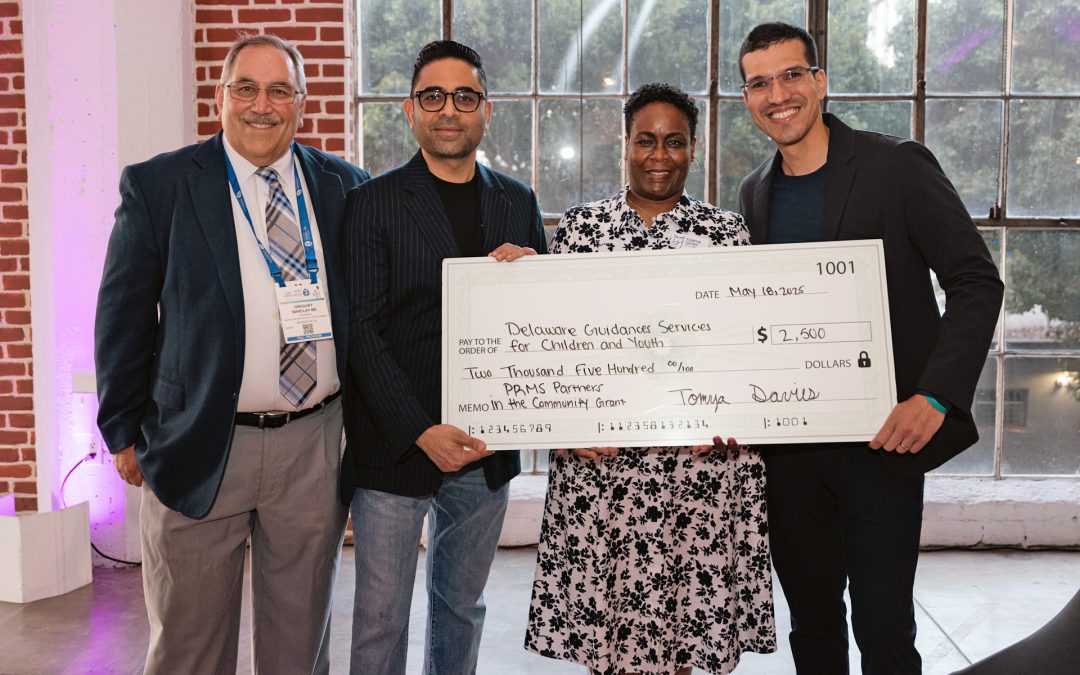
We’re thrilled to be honored by PRMS as one of the 2025 Partners in the Community Grant recipients!
Thanks to our nomination and commitment to children’s mental health, we’ve been awarded a $2,500 grant to support our vital outreach efforts.
This funding will enhance our ability to provide essential mental health resources and programs for children and youth across Delaware. It’s a wonderful recognition of our mission—and a significant boost to our ongoing community impact.
A heartfelt thanks to PRMS for this support and trust in our work!

Jan 16, 2025 | Children-Youth, News, Outreach
On January 8th, Shemar and Simran from the 𝐇𝐞𝐥𝐩𝐢𝐧𝐠 𝐇𝐚𝐧𝐝𝐬 𝐂𝐨𝐦𝐦𝐮𝐧𝐢𝐭𝐲 𝐀𝐰𝐚𝐫𝐞𝐧𝐞𝐬𝐬 𝐏𝐫𝐨𝐣𝐞𝐜𝐭 presented 𝐂𝐡𝐢𝐥𝐝 𝐇𝐞𝐥𝐩 𝐒𝐩𝐞𝐚𝐤 𝐔𝐩 𝐁𝐞 𝐒𝐚𝐟𝐞 to the children at 𝐆𝐮𝐚𝐫𝐝𝐢𝐚𝐧 𝐀𝐧𝐠𝐞𝐥𝐬 𝐂𝐡𝐢𝐥𝐝𝐜𝐚𝐫𝐞 𝐂𝐞𝐧𝐭𝐞𝐫 in Wilmington. The children were very excited and actively participated in learning safety and shared their stories.

Shemar and Simran from the 𝐇𝐞𝐥𝐩𝐢𝐧𝐠 𝐇𝐚𝐧𝐝𝐬 𝐂𝐨𝐦𝐦𝐮𝐧𝐢𝐭𝐲 𝐀𝐰𝐚𝐫𝐞𝐧𝐞𝐬𝐬 𝐏𝐫𝐨𝐣𝐞𝐜𝐭

Aug 2, 2024 | News
A group of children who share a common trait were brought together this week at the University of Delaware’s STAR Campus for Camp Dream. Speak. Live.
Dr. Evan Usler, an assistant professor in the College of Health Sciences’ Communication Sciences & Disorders program, said the annual camp is for children with a stutter, and helps them become effective communicators.
“There’s magic shows, there’s scavenger hunts, there’s activities, we have a DJ, so the kids have a lot of fun,” said Usler, “but underneath the surface is a pretty intensive program of therapy for these kids.”
“So underneath all the fun stuff they do they’re building their skills at talking, speaking, communicating, so they learn things like how do they use their voice, how do they focus their eye contact, how do they ask questions, how do they say what they want to say when they want to say it. For many of these kids they might be the only kid they know with this issue,” he said.
“What this camp does is bring these kids together and they learn from each other and they learn they’re not the only ones. They have very similar thoughts, feelings, fears about ‘how can I talk in the world, how can I make friends?'” he added. “What we focus on is not, not stuttering. What we focus on, despite the stutter, are you able to transmit the message you want to transmit regardless of any interruptions.”
10-year old Santino Messina of New Castle said he had a lot of fun and learned a lot as well.
“It’s basically like being with your next door neighbors,” said Messina. “Everybody knows each other, we come, learn, have a good time, interact, and I think for some kids it’s not as alarming to be around other people who also stutter.”
Counselors for the camp are graduate students in the University’s Speech Language Pathology program and Usler said the real-world experience in working with kids who stutter is invaluable.
For Usler, who also has a stutter, the camp hits home.
“I always begin the camp by saying ‘this is the camp I wish they had back in the 1980s,'” he said.
The Camp Dream. Speak. Live. concept was founded a decade ago at the University of Texas in Austin.
Read Full Article | Mike Phillips | Published Aug 2, 2024 at 12:45 pm | WDEL.com

Jul 25, 2024 | Children-Youth, DGS Staff, Families, News
To help parents facing adversity nurture their children, a Delaware prof created a program now used by 10 countries.
‘Babies can’t wait’ for their families to resolve issues like homelessness and addiction, Mary Dozier says. So, she found a way to equip their mothers and fathers with the skills needed to meet their kids’ needs while addressing their own issues.
A young mother sits on the floor in a motel room with her baby girl on her lap, her son milling around in the background. The mother taps the infant’s fist on a toy, as the baby dazes blankly, unengaged.
These moments were captured on video before the mother underwent a 10-session intervention for parents who have trouble bonding with their children because of challenges tied to poverty, homelessness and other issues. In a montage of clips filmed afterward, the woman can be seen snuggling the baby sleeping on her chest while she talks to and plays with her young son at her side. In another clip, the son dangles his arm around his mother’s shoulders as she jostles the baby in her lap.
There is life and love in the room.
“This mom continues to live in a motel room,” said Mary Dozier, a professor of psychological and brain sciences at the University of Delaware who developed the program. “We haven’t helped her with child care. We haven’t helped her with housing. We haven’t directly tried to change depression or anything else, and yet, these two children’s lives have fundamentally changed.”
Dozier has spent three decades studying the development of infants and young children. The home visiting program that she developed, dubbed ABC for Attachment and Biobehavioral Catch-Up, uses coaches who provide in-the-moment positive reinforcement to help parents learn to nurture a child, follow a child’s lead and avoid frightening behaviors. These skills are useful for anybody, but they are “especially important when children have experienced adversity or trauma,” Dozier said.
Through a series of studies coordinated with the Philadelphia Department of Health and Human Services, Dozier and a team of researchers identified children who were at risk of neglect and have followed their development for 15 years, examining the short- and long-term effects of the ABC program. This research has shown that the ABC program – now used in 26 states and 10 countries – improves children’s brain and behavioral development and helps them gain trusting, secure relationships with their parents. Studies have indicated that the easily-implemented ABC program improves children’s executive-functioning and self-control and that it regulates cortisol production, the stress-hormone that partly affects sleep.
“We see this everywhere we go, whether it’s when we implement it nationally and internationally or in a randomized trial,” said Dozier, the UNIDEL Amy E. du Pont Chair of Child Development at the University of Delaware. “We see the parents change. They become more sensitive. They follow the lead more of their child. We see the children’s attachment is more likely to be secure and organized.”
Currently, Dozier and her team have been researching how the ABC program impacts parents with substance use disorder. The $3.1 million, National Institutes of Health-funded study began in 2020 and ends in 2026. It includes about 200 parents from Pennsylvania, New Jersey, Delaware and Maryland who are receiving treatment, such as the medications methadone or buprenorphine that help stem the cravings for and effects of opioids. Since opioids and other drugs interfere with brain receptors involved with the reward system, the natural rewards that come from bonding with a child and parenting may be affected.
“We (humans) are designed so that parenting will be rewarding, but that system gets disrupted when we have enough challenges in our life, either because of drugs or mental health issues or living in a motel room with three kids,” Dozier said. “So what you’ve got to do is change the system, tweak it so that eventually children can be become more rewarding, so that the process of parenting is itself rewarding.”
With the parents with substance use disorder in the ABC program, Dozier’s team has been placing electrodes on their heads to study brain activity as they look at pictures of babies and pictures of drugs.
“What we anticipate is that the baby would become relatively more important to them than the drug, if they’re in the … ABC intervention than if they’re not,” Dozier said. “But I don’t know the answer to that at this point.”
Helping parents learn to become more engaged with their children is necessary even before resolving substance use, stabilizing housing or addressing other challenges because “babies can’t wait,” Dozier said.
No matter what situation the parents are in, coaches conducting the ABC intervention do not critique or correct parents’ actions. Instead, starting in the very first session, the coaches “are already trying to find something in what they’re (the parents) doing that is positive and pointing it out,” Dozier said.
The parent should feel supported by the ABC coach whose ongoing, positive reinforcement of what the parent is doing well elicits a “cascade of behaviors, and it makes parents really feel empowered. It makes them feel good about themselves,” Dozier said.
“I was 37, and I was a psychologist when I had my first child,” Dozier said. “If you had an expert come in to say they’re going to evaluate my parenting, I would have found that threatening. And so you can imagine what it would feel like for a 20-year-old who is using opioids.
“Everybody said, ‘How in the world could you possibly have a child? You have no business having a child.’ They’re (the parents) going to just feel so demeaned. So, the positive comments are just so critical in helping them feel rewarded by this process. And eventually, what we want is that they are rewarded by their baby and rewarded by parenting itself. We’re sort of scaffolding that process to get them to that point.”

May 24, 2024 | Children-Youth, Events, Families, News, Outreach
Join the American Foundation for Suicide Prevention and it’s Delaware Chapter for the annual ‘Out of the Darkness Walk. Raise awareness for mental health and suicide prevention. Funds benefit the American Foundation for Suicide Prevention and its Delaware Chapter.
- September 22 – Wilmington Walk at Delcastle Recreational Park. Register Here
- October 19 – Milford Walk at Bicentennial Park. Register Here
Jan 2, 2024 | Children-Youth, News
Delaware Governor John Carney has signed in to law three pieces of legislation meant to improve mental health resources in Delaware.
“My highest priority is making sure we give students everything they need to be successful,” said Governor Carney. “This package of legislation strengthens our mental and behavioral health services so that we can identify, support, and help students in and out of the classroom. I want to thank Speaker Longhurst and the members of the Delaware General Assembly for their advocacy and hard work on behalf of our students.”
“Today we took another critical step forward, not just in policy, but in our commitment to creating a future where every Delawarean has access to the mental health care and resources they need,” said House Speaker Valerie Longhurst. “The bills Governor Carney signed today will help to deliver the compassionate, comprehensive mental health support residents need and deserve, but we’re not stopping here. Just as we have for the last several years, we’re going to continue to address the mental health crisis in our state with the urgency and seriousness it deserves.”
Legislators say the first bill, House Bill 3, helps students by allowing them excused absences for mental or behavior health reasons. As a part of this bill, any student who needs more than two of these absences be referred to a school-based mental or behavioral health specialist.
The second is House Bill 4, which is also aimed at students. Legislators say that it makes sure students have access to behavior health support in school after a school-connected traumatic event, which is defined as the death of any student, educator, administrator, or other building employee, or any other traumatic event that effects a significant portion of the students at the school.
“During my 25-year tenure as a public school teacher, I saw firsthand how mental health played a crucial role in a student’s ability to meaningfully learn and develop,” said Sen. Laura Sturgeon, chair of the Senate Education Committee and Senate prime sponsor of HB 3 and HB 4.
“With House Bill 3 and House Bill 4, we are ensuring Delaware’s youngest minds have access to the mental and behavioral support they need to thrive both in and outside of the classroom.”
As a part of House Bill 4, officials say the Delaware Department of Education will develop guidance, best practices, and written resources for school dealing with school-connected traumatic events. They say the department will also be responsible for covering the costs of grief counseling offered to students for up to 45 days after the event, with an option to renew for another 45 days.
“We’re grateful to Speaker Longhurst for, once again, taking important steps to support youth mental health in Delaware,” said Angela Kimball, senior vice president of advocacy and public policy at Inseparable. “This year’s legislation showcases the Speaker’s leadership and dedication to youth mental health, which not only makes Delaware a better place to grow up but also is putting Delaware on the map as a national leader in mental health.”
Both bills are part of a larger package called “the 2023 Delaware Behavioral Health Package.” They say the measures are part of a holistic approach to improving the way mental health care is given to children in Delaware.
The third house bill, 160 (S), is about creating a way to fund the National Suicide Prevention Lifeline. The 988 National Suicide Designation Act was passed by Congress in 2020, but legislators say states were independently responsible for setting the lifeline up. 988 would be the universal three-digit calling code for it, like how 911 is used for public safety emergencies.
The bill generates income to fund the lifeline through a 60-cent monthly surcharge on all phones and landlines, as well as a 60-cent fee on prepaid services. Legislators say these fees mirror fees already collected to support 911.
The bill has the money go to the Behavior Health Crisis Intervention Services Fund, which would fund the lifeline and a plan for a variety of services meant to help Delawareans experiencing a behavioral health crisis.
House Bill 160 (S) also creates a 20-member board, says legislators, that will develop a comprehensive statewide crisis intervention services plan and recommend to the governor and general assembly how to use the money from the surcharge. They say the board will be made up of state health officials, behavioral health experts, medical professionals, law enforcement and others.
“The creation of the 988 hotline wasn’t just a symbolic gesture — this has been a critical tool to help people get the same level of urgent and individualized care that they would if they were to call 911,” said Sen. Poore. “I’m proud to work alongside Speaker Longhurst to make the 988 hotline a more sustainable resource here in Delaware. We must continue to invest in our state’s mental health infrastructure, and I thank Governor Carney for signing this next important step into law.”
Credit WRDE | Benjamin Rothstein
Oct 17, 2023 | Charity, Children-Youth, Events, Families, News, Outreach, Teens
With your support, Delaware Guidance Services continues to serve children and their families here in Delaware!
Click on our video to see images from our 70th anniversary celebration!

Oct 12, 2023 | News, Outreach
INFORMATION SESSION
Please join 𝐌𝐚𝐥𝐢𝐚 𝐁𝐨𝐨𝐧𝐞, Program Manager of the Mobile Response and Stabilization Services (MRSS) Youth Crisis Program at Delaware Guidance Services, for an information session about the 𝐌𝐑𝐒𝐒 𝐜𝐫𝐢𝐬𝐢𝐬 𝐩𝐫𝐨𝐠𝐫𝐚𝐦.
Participants will learn about the statewide, 24/7 services available through MRSS as well as recommended best practices in crisis intervention services for children and youth.
Time will be provided for questions and answers related to the specific situations schools encounter when supporting children in crisis.

Jun 15, 2023 | Full-time Jobs, News
Full-time | Salary range: $28,050 – $37,950 a year
Summary/objective
Under the supervision of the Crisis Clinical Coordinator, the Youth Peer Support Specialist will provide peer mentoring services, include peer counseling, mentoring, support, and advocacy according to the needs, interests and perspectives of youth receiving services from the Mobile Response and Stabilization Services (MRSS) program due to an identified crisis. The ultimate goal of peer mentoring is to engage the youth in the support available, advocate for the needs of the youth, and assist in transitioning into other support services that may be needed in the community.
The focus of the Youth Peer Support Specialist is to support the youth during the risk assessment that occurs when a request is made to the MRSS program and to provide ongoing mentoring while the MRSS case is open. The Youth Peer Support Specialist will work closely with the MRSS crisis clinician to help the youth achieve their goals and find stability in the community.
In addition, the incumbent is responsible for documentation of mentoring services provided from intake through discharge. This position is available due to grant funding that will end on September 30, 2025.
Essential functions:
Risk Assessment Mentoring
- Maintain professional, trauma-informed, and empathetic interactions during crisis interactions with children, families, and stakeholders
- Use critical thinking and risk management skills when connecting with youth during mentoring
- Understand and utilize knowledge about warning signs and risk factors associated with suicide risk and risk of harm to others
- Develop comprehensive skills in providing support for youth in crisis
Case Management
- Provide individual peer support and counseling
- Share lived experience related to recovery, when appropriate
- Conduct routine home visits
- Communicate with and provide appropriate documentation to the DPBHS team, as needed
- Communicate with appropriate stakeholders to maintain a systems-based approach to assisting with the youth’s stabilization
- Maintain complete, accurate, and timely documentation
General Responsibilities
- Uphold professional standards of peer mentoring and the mission of the organization
- Maintain a quality code of conduct, ethics and professionalism
- Provide goal-directed and team-oriented services
- Communicate effectively and professionally with all stakeholders
Competencies/ Capabilities:
- Reliability & Flexibility
- Customer Service
- Written and Verbal Communication
- Collaboration and Teamwork
Work environment: Community-Based, Office location in Lewes, Dover, or Newark, DE
Travel required: Travel to locations where the client resides or is located
Minimum qualification:
- Lived experience as a youth who experienced support due to behavioral health needs
- Young Adult ages 18-24 years old
- High School Diploma or Equivalent
- Valid driver’s license and satisfactory driving record
Delaware Guidance Services is an Equal Opportunity Employer. Reasonable accommodations may be made to enable individuals with disabilities to perform essential functions.
Other duties:
Please note this job description is not designed to cover or contain a comprehensive listing of activities, duties or responsibilities that are required of the employee for this job. Duties, responsibilities and activities may change at any time with or without notice.
EMAIL us today!

Jun 6, 2023 | Families, News, Teens
Why Delaware believes schools, parents are key to preventing more overdoses among kids
Slipping grades. Missed classes. Inexplicable vomiting and nausea. A sudden stoppage in brushing teeth.
All of these are potential signs of addiction among young people — signs that Delaware state officials urged parents to be on the lookout for as fatal youth overdoses continue to rise.
While recent survey results show lower self-reported drug use rates among high school students in Delaware, experts said a decreased concern about using prescription drugs without a prescription shows the need for greater intervention and education, particularly in schools.
“Students spend an average of 1,000 hours each year in school, so we know that schools need to be an active partner in helping our kids and their families navigate the changing landscape of substance abuse,” said Delaware Secretary of Education Mark Holodick at a community briefing Friday.
The new data comes from the Youth Risk Behavior Survey, which is taken every other year by a random representative sample of students enrolled in district, charter and “alternative” schools in Delaware, as well as by many students nationwide. The anonymous survey asks about everything from seatbelt usage to physical activity and is analyzed by the Centers for Disease Control and Prevention.
Among the Delaware students surveyed, 6% said they’d taken prescription pain medicine without a doctor’s prescription or differently than how a doctor told them to use it in the past month, and only 58% think their friends think using prescription drugs without a prescription is very wrong.
“Knowing about risks is crucial to supporting school community programs, communication campaigns and other prevention efforts,” Brittingham said.
Fentanyl remains huge problem in Delaware
One of the main risks — and one of the primary causes of overdoses among all age groups — is the presence of fentanyl in drugs, often unbeknownst to the user. The highly potent synthetic drug has become increasingly common in counterfeit prescription pills, which the Youth Risk Behavior Survey shows are more commonly used than opioids like heroin by young people.
Like adults, fatal overdose deaths among youth have increased dramatically in recent years, with most involving opioids like fentanyl.
OVERDOSE DEATHS:A record 447 Delawareans died of overdoses. What we learned about them, their deaths.
Median monthly overdose deaths rose by 109% between 2019 and 2021 for youth between the ages of 10 and 19, according to the CDC, and youth deaths involving fentanyl rose by 182% during that same time period.
Division of Public Health Chief Physician Dr. Michael Coletta explained that many younger people who unintentionally overdose used what they believed to be prescription pills like Xanax or Oxycontin, not realizing that the pills are laced with fentanyl.
Colette said the state has been “meeting kids where they’re at” through their social media campaign, which started in late 2022 with the goal of educating young people about the possible presence of fentanyl in pills they may buy online — sometimes on that same social media platform.
Read Full Article | Delaware Online

Jun 5, 2023 | Children-Youth, Families, News
U.S. Surgeon General Issues Advisory on Social Media and Youth Mental Health
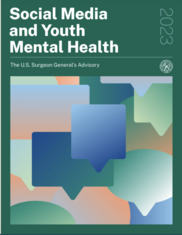
U.S. Surgeon General Dr. Vivek Murthy has issued an advisory about social media’s impact on youth mental health. It notes that while social media can provide benefits for some children and youth, there is a growing body of research about potential harms social media use poses.
Children and adolescents on social media are commonly exposed to extreme, inappropriate, and harmful content and frequent social media use can contribute to poor mental health, including depression and anxiety. The advisory outlines action steps that policymakers, technology companies, researchers, and families can take to mitigate the risk of harm and make social media safer and healthier for children and youth.
OJJDP, in partnership with the National Center for Missing & Exploited Children (NCMEC), provides resources to keep youth safe online, including NCMEC’s NetSmartz program.
In addition, OJJDP’s mentoring programs support youth mental health and its National Mentoring Resource Center is dedicated to enhancing mentoring practices that support positive youth outcomes.
Download the Advisory

Jun 2, 2023 | Events, Families, News, Outreach
June is LGBTQIA+ pride month! Celebrate the ones you love by supporting local businesses, non-profits, and community groups that uplift and enrich the lives of LGBTQIA+ people in Delaware!


