2025 Partners in the Community Grant Recipient

2025 Partners in the Community Grant Recipient

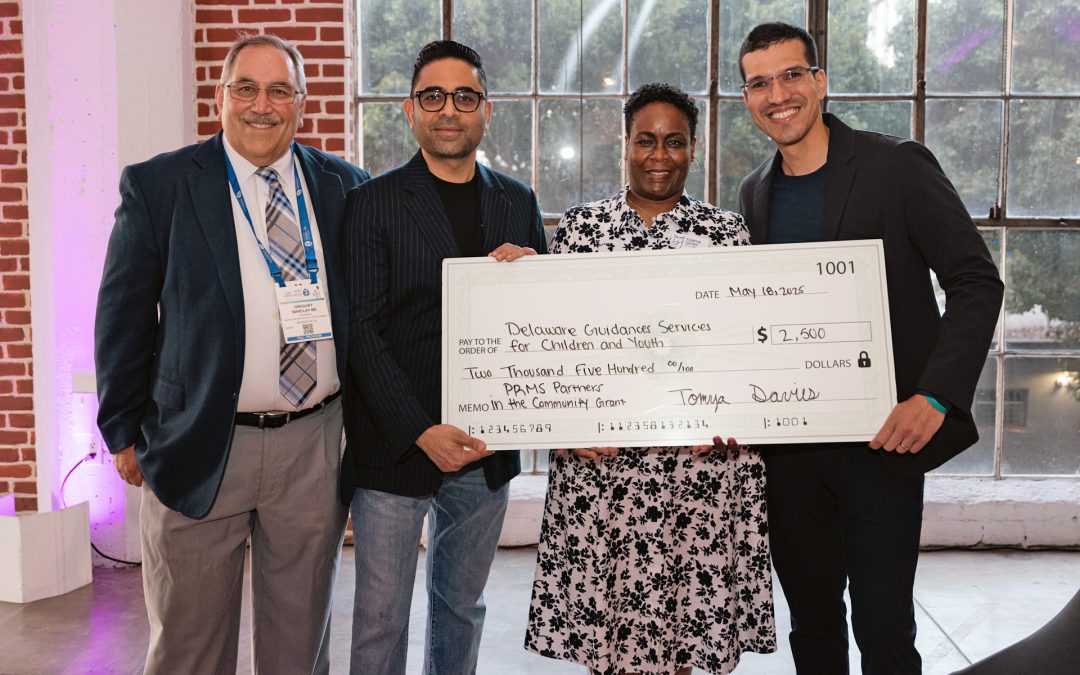
We’re thrilled to be honored by PRMS as one of the 2025 Partners in the Community Grant recipients!

Thanks to our nomination and commitment to children’s mental health, we’ve been awarded a $2,500 grant to support our vital outreach efforts.

This funding will enhance our ability to provide essential mental health resources and programs for children and youth across Delaware. It’s a wonderful recognition of our mission—and a significant boost to our ongoing community impact.

A heartfelt thanks to PRMS for this support and trust in our work!

Helping Hands Community present Child Help Speak Up Be Safe

Helping Hands Community present Child Help Speak Up Be Safe

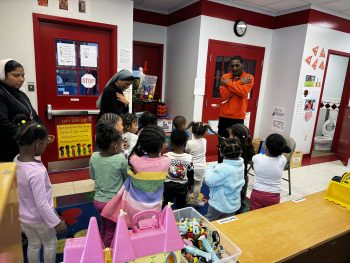
On January 8th, Shemar and Simran from the 𝐇𝐞𝐥𝐩𝐢𝐧𝐠 𝐇𝐚𝐧𝐝𝐬 𝐂𝐨𝐦𝐦𝐮𝐧𝐢𝐭𝐲 𝐀𝐰𝐚𝐫𝐞𝐧𝐞𝐬𝐬 𝐏𝐫𝐨𝐣𝐞𝐜𝐭 presented 𝐂𝐡𝐢𝐥𝐝 𝐇𝐞𝐥𝐩 𝐒𝐩𝐞𝐚𝐤 𝐔𝐩 𝐁𝐞 𝐒𝐚𝐟𝐞 to the children at 𝐆𝐮𝐚𝐫𝐝𝐢𝐚𝐧 𝐀𝐧𝐠𝐞𝐥𝐬 𝐂𝐡𝐢𝐥𝐝𝐜𝐚𝐫𝐞 𝐂𝐞𝐧𝐭𝐞𝐫 in Wilmington. The children were very excited and actively participated in learning safety and shared their stories.
Shemar and Simran from the 𝐇𝐞𝐥𝐩𝐢𝐧𝐠 𝐇𝐚𝐧𝐝𝐬 𝐂𝐨𝐦𝐦𝐮𝐧𝐢𝐭𝐲 𝐀𝐰𝐚𝐫𝐞𝐧𝐞𝐬𝐬 𝐏𝐫𝐨𝐣𝐞𝐜𝐭

Shemar and Simran from the 𝐇𝐞𝐥𝐩𝐢𝐧𝐠 𝐇𝐚𝐧𝐝𝐬 𝐂𝐨𝐦𝐦𝐮𝐧𝐢𝐭𝐲 𝐀𝐰𝐚𝐫𝐞𝐧𝐞𝐬𝐬 𝐏𝐫𝐨𝐣𝐞𝐜𝐭

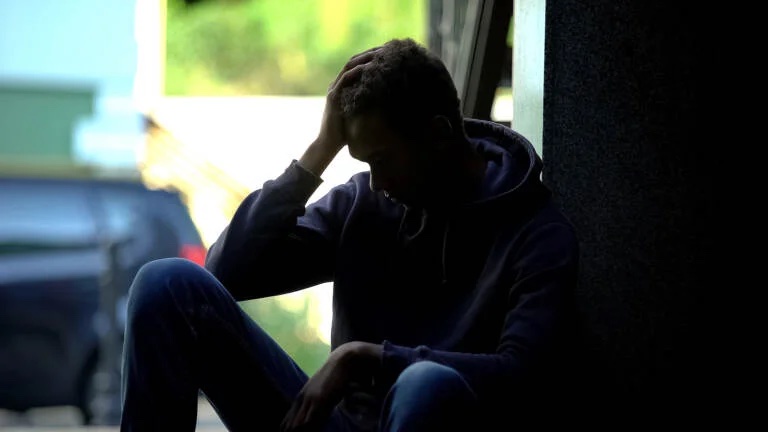
Why are bullies so mean?

Why are bullies so mean?

A youth psychology expert explains what’s behind their harmful behavior

Sara Goldstein, University of Delaware, The Conversation

Being bullied can make your life miserable, and decades of research prove it: Bullied children and teens are at risk for anxiety, depression, dropping out of school, peer rejection, social isolation and self-harm.

Adults can be bullied too, often at a job, and they may suffer just as much as kids do.

You can help stop bullying in your school or workplace.

I’m a professor who studies child and adolescent development. That includes learning how people become bullies – and how they can be stopped.

First, let’s define what bullying is: It’s mean-spirited, harmful behavior by someone with more power or status – like a popular kid at school or a supervisor at work – who repeatedly picks on, harasses, irritates or injures a person with less power or status.

Bullying can take many forms – physical, like pushing, shoving and hitting; relational, such as spreading rumors, keeping somebody out of a friend group or just rude remarks; or sexual harassment and stalking behavior.

Sometimes, bullies target someone because of their race, religion, sexual orientation or appearance. People from the LGBTQ+ community, or who are overweight, or with a physical or developmental disability are more likely to be bullied. As a result, they may develop mental health problems, including depression, anxiety and self-harming behavior.

So why do bullies do it?

People learn how to bully others early on through what psychologists call modeling and social learning. This means bullies see other people bullying and they essentially model, or copy, this aggressive behavior.

Media is a big culprit here. When mean or violent conduct is glamorized and gamified in music, video games, TV and movies, bullies will imitate what they see and hear, especially if it seems cool or if it’s rewarded.

Family is also an influence. If children grow up in a home without kindness and closeness, but with plenty of physical punishment and heavy conflict – including parents fighting with each other – then children view this behavior as acceptable. They can go on to treat their peers this way.

A similar thing happens when a kid falls into a group of friends who are bullies; they become more likely to bully others themselves. To say it another way, they bully because they think it makes them look cool in front of their friends.

And bullies bully for lots of other reasons. Some do it because it makes them feel better about themselves when they put other people down. Other bullies discovered that force and intimidation worked for them in the past, so it’s a go-to strategy to get what they want. Still others simply have difficulty controlling themselves and can’t calm down when they’re angry.

And with some bullies, it’s just a way to get ahead. For instance, an adult bully in the workplace may spread an embarrassing rumor about a co-worker to keep a rival from being promoted.

Delaware Children’s Museum continues to fulfill mission

Delaware Children’s Museum continues to fulfill mission

Funding is essential to ensure Delaware Children’s Museum continues to fulfill mission

Jen Bush | Guest columnist

Since opening its doors in April 2010, the Delaware Children’s Museum is the only children’s museum in the state and has welcomed over 1 million guests.

The big, yellow building on Wilmington’s Riverfront is specifically designed to serve young children by offering hands-on, unique exhibits and programming powered by STEAM (science, technology, engineering, arts and math) education and playful learning.

For generations of Delaware children, the DCM is their first museum experience. The children who explored our galleries when we opened are now in college or will be graduating from high school. Our young visitors today are discovering STEAM in our exhibits and programs.

DCM’s founders wanted to bring a unique experience to children in Delaware. Our first board president, William Smith, and current board member explained the founders’ vision: “When I first was involved with the DCM, my children were young. The founding members envisioned a place children could learn about the world and for me, the effect science has in their day-to-day environment.  The goal was to have a safe place children can learn through play.  I am so pleased we have continued to achieve this mission.”

We see the power of play every day at DCM. Young children learn through their play, and play is the serious work of childhood.

Playful learning or “plearning” was coined by Dr. Roberta Michnick Golinkoff, Unidel H. Rodney Sharp Chair and professor in the School of Education at the University of Delaware and former DCM board member.

She shared her thoughts on how the DCM is an important resource to families: “Research tells us that the kind of play that takes place in children’s museums is very important to children’s wellbeing – especially after COVID when children experienced much isolation and too much screen time (although this was often essential so that parents could work.) DCM is a gift to the children and families in our community and deserves our full support!”

Read Full Article HERE
UD Summer Camp is Something to Talk About

UD Summer Camp is Something to Talk About

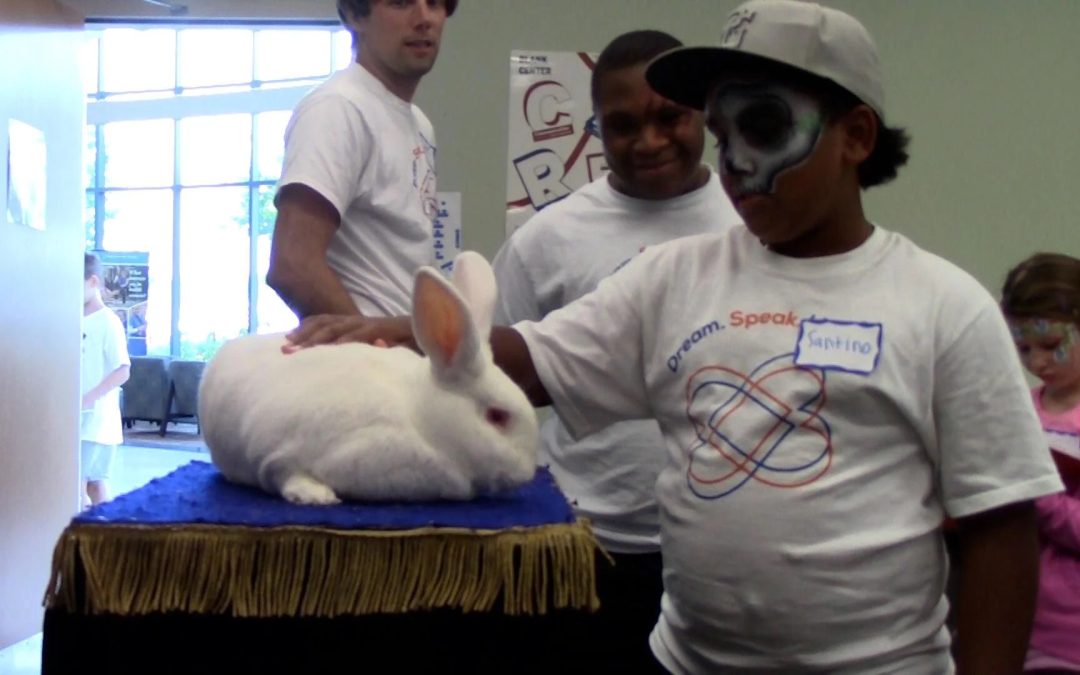
A group of children who share a common trait were brought together this week at the University of Delaware’s STAR Campus for Camp Dream. Speak. Live.

Dr. Evan Usler, an assistant professor in the College of Health Sciences’ Communication Sciences & Disorders program, said the annual camp is for children with a stutter, and helps them become effective communicators.

“There’s magic shows, there’s scavenger hunts, there’s activities, we have a DJ, so the kids have a lot of fun,” said Usler, “but underneath the surface is a pretty intensive program of therapy for these kids.”

“So underneath all the fun stuff they do they’re building their skills at talking, speaking, communicating, so they learn things like how do they use their voice, how do they focus their eye contact, how do they ask questions, how do they say what they want to say when they want to say it. For many of these kids they might be the only kid they know with this issue,” he said.

“What this camp does is bring these kids together and they learn from each other and they learn they’re not the only ones. They have very similar thoughts, feelings, fears about ‘how can I talk in the world, how can I make friends?'” he added. “What we focus on is not, not stuttering. What we focus on, despite the stutter, are you able to transmit the message you want to transmit regardless of any interruptions.”

10-year old Santino Messina of New Castle said he had a lot of fun and learned a lot as well.

“It’s basically like being with your next door neighbors,” said Messina. “Everybody knows each other, we come, learn, have a good time, interact, and I think for some kids it’s not as alarming to be around other people who also stutter.”

Counselors for the camp are graduate students in the University’s Speech Language Pathology program and Usler said the real-world experience in working with kids who stutter is invaluable.

For Usler, who also has a stutter, the camp hits home.

“I always begin the camp by saying ‘this is the camp I wish they had back in the 1980s,'” he said.

The Camp Dream. Speak. Live. concept was founded a decade ago at the University of Texas in Austin.

Read Full Article  |   | Published Aug 2, 2024 at 12:45 pm | WDEL.com

Helping Parents Nurture Their Children

Helping Parents Nurture Their Children

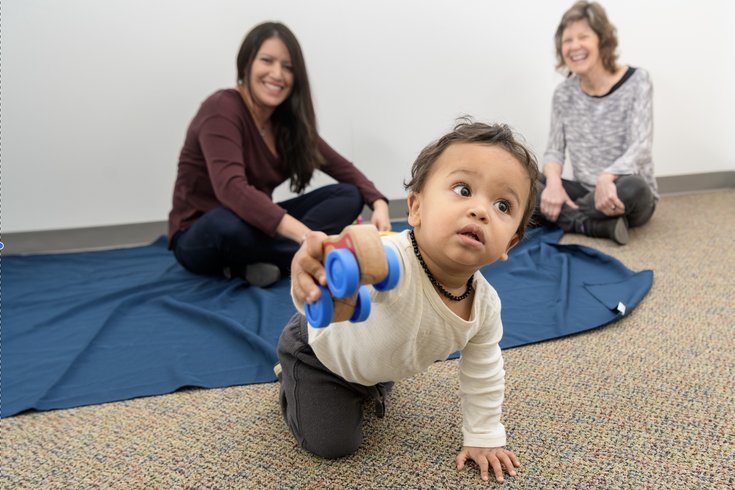
To help parents facing adversity nurture their children, a Delaware prof created a program now used by 10 countries.

‘Babies can’t wait’ for their families to resolve issues like homelessness and addiction, Mary Dozier says. So, she found a way to equip their mothers and fathers with the skills needed to meet their kids’ needs while addressing their own issues.

DGS Staff and Outreach in Delaware

DGS Staff and Outreach in Delaware

A huge thank you to Malia Boone, Brandy Beatty, and Sara Heinicke for representing DGS at the AKA Zeta Omega Mental Health Forum on the Delaware State University campus.

AND, Michael Hoffa and Sammi Becker met with community members at the Food Bank of Delaware‘s Resource and Job Fair in Milford.
DGS Staff and Outreach in Delaware
Their enthusiastic outreach ensures the services and opportunities provided by DGS are easily available to #Delawarians. Thank you all for representing DGS so well!
Walk With Us

Walk With Us

Join the American Foundation for Suicide Prevention and it’s Delaware Chapter for the annual ‘Out of the Darkness Walk. Raise awareness for mental health and suicide prevention. Funds benefit the American Foundation for Suicide Prevention and its Delaware Chapter.

  • September 22 – Wilmington Walk at Delcastle Recreational Park. Register Here
  • October 19 – Milford Walk at Bicentennial Park. Register Here
Students cite mental health struggles as they opt out of college

Students cite mental health struggles as they opt out of college

Especially students from LGBTQ+ and marginalized communities

A new survey shows one-third of students cite mental health concerns for dropping out of college, or never going.

What creates a safe, supportive learning environment

What creates a safe, supportive learning environment

Want to make sure your child’s school is safe? These are the questions parents should ask.

With gunfire in schools at an all-time high, though still rare, back-to-school season begins this year with many parents more concerned than ever about school safety.

While many schools and states have turned to physical safety measures such as extra police presence and metal detectors, others rely on social-emotional learning to improve school climate.

“You have these two genres – the zero-tolerance policies and making each school look like a little prison on one side. Ironically, you have – at the same time – the opposite vision of making school’s a more loving and caring and supportive place,” said Ron Avi Astor, a professor of social work and education at the University of California, Los Angeles.

He noted that schools are increasingly leaning on both methods simultaneously to address school safety – a route he said might not work.

“Are both of these views compatible? Can (students) feel like they belong … if their school is doing both? We don’t know for sure,” Astor said. “These are really, in some ways, scary times in our country, because it’s not a simple list that parents should think about. They have to balance all these issues.”

Experts, educators and advocates offered USA TODAY some of the questions parents should consider when assessing the safety of their children’s schools.

What is social-emotional learning?

School climate, which refers to students’ feelings of acceptance, appreciation and value in their school, is the most important factor for maintaining safety, said Aaron Kupchick, professor of sociology and criminal justice at the University of Delaware.

To maintain a positive school climate, experts stress the importance of teaching social emotional learning (SEL) – which prioritizes the development of social and emotional skills in students, including self-awareness, empathy and resilience. Over the past few years, SEL has been linked to critical race theory, and conservatives have said the practice as a form of “woke indoctrination.”

SEL at school is crucial for student safety and success, said Heather Reynolds, a professor of teacher education at State University New York, Empire State University.

“It impacts not only safety, but academics. It improves mental health and students feel safer. They’re more engaged, more likely to come to school and have a positive perception of school.”
Read full article  |   Itzel Luna  |   Cincinnati Enquirer
1-800-969-HELP (4357)